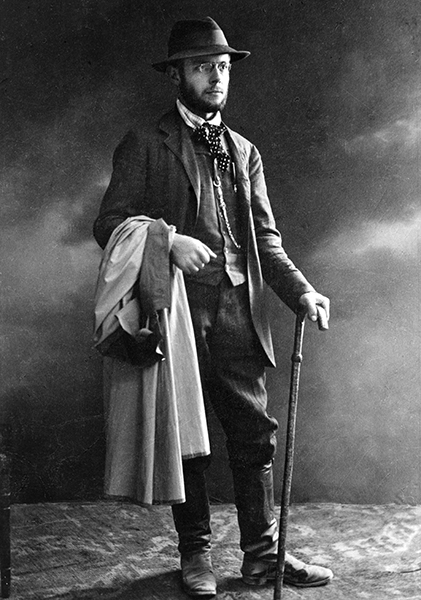
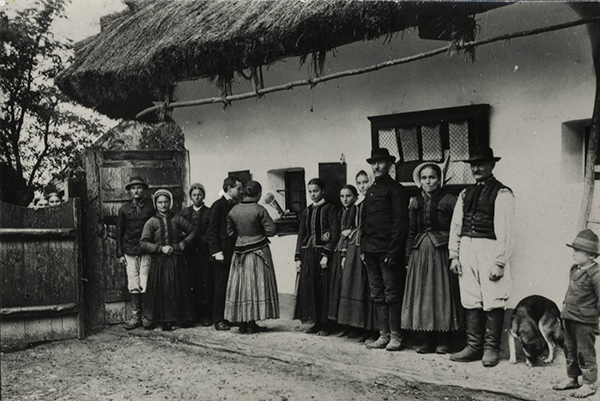
 In May 1904, Béla Bartók travelled to Gerlicepuszta (in present-day Slovakia), where he first heard a Hungarian folk song from a servant girl originating from Kibéd (TN: present-day Chibed, Romania), Lidi Dósa. This date marks the beginning of Bartók’s career in ethnomusicology. He chose the location of his activity in ethnomusicology for financial reasons, initially through his relatives and acquaintances, and in the summer of 1906, he began to collect folk songs on a regular and systematic basis, based on scientific research. By this time, he had already taken Zoltán Kodály’s instructions into account and was using the phonograph, a technical innovation of the time. During the year, he collected more than a thousand Hungarian folk songs from the Southern Great Plain, Transdanubia and Pest County, and also recorded three hundred Slovak folk songs. In 1907, he continued his work in the Transdanubian region and then travelled to Transylvania (Kalotaszeg, Brassó, Csíkszék and Gyergyószék), where he collected seven hundred melodies. During his stay in Transylvania, he noticed the presence of pentatonic melodies in old Hungarian melodies, which was one of the greatest discoveries in the history of folk music of the time. He started collecting Romanian folk songs in 1909, for the first time in Belényes (TN: present-day Beiuș, Romania) and its surroundings (Bihor county).